Just wing it, and your sales forecast will be very predictable.
Said no one ever…
Introduction
Sales is part art, part science and part dark art.
For years, sales have run by “gut feel” and hope. Yet, hope is not a strategy.
A company had a few salespeople who closed deals, and a few that didn’t. If you were lucky, you had one “rainmaker” who was the best salesperson every year. Yet, when you interviewed the next sales candidate and were convinced they are the next rainmaker – that did not pan out, right?
Often, we confuse the clothing, the look, the mannerisms, the big company the candidate came from, and their “Rolodex” – with closing deals. Been there, done that. Then after a while, the salesperson ends up not selling anything, and furthermore, is convinced they are on the precipice of a deal – constantly.
The problem begins when a company switches from early-stage founder-led sales, to a team with a sales leader. If the founder/CEO is on every sales call, they can read the room, the buying signals and the overall “rating” of the call. This helps the CEO gauge the temperature so to speak, to guesstimate the close rate of a sales cycle.
I used words that on purpose are not deterministic. Because it is not something you can know, for sure. You have indications, you have transcripts of what was said and implied. Yet, anything can happen in sales. Anything.
The worse thing though, is that you ask any salesperson how they think the call went, they will tell you what you want to hear. They will tell you what they THINK went on. They will tell you what they HOPE will happen. They will tell you what you WANT to hear.
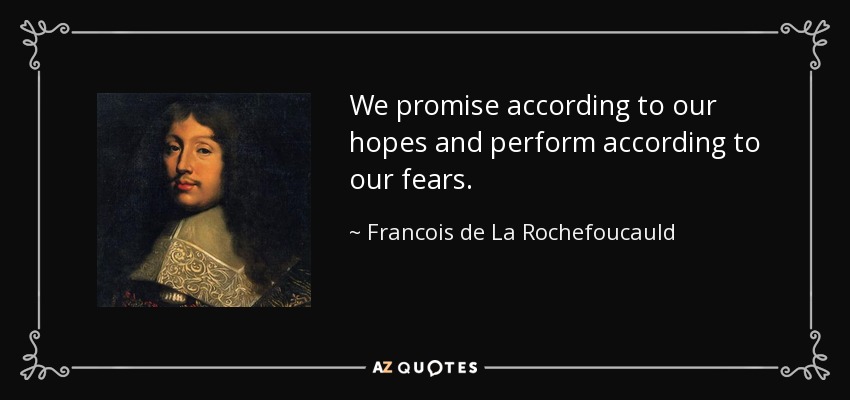
“We promise according to our hopes and perform according to our fears.” -La Rochefoucauld
Sales Methodologies
In the 1970s, the concept of “Sales Methodology” was introduced. It aimed to provide the sales leader, and the team, a common way to describe and discuss the sales cycles. Furthermore, it was meant to help the sales leader and CEO predict their close rate, and report it up to the board.
However, can you predict your close rate if the sales methodology allows the salespeople to “creatively” fill the form?
If you know that salespeople will report their forecast looking through rose-colored glasses, then you simply moved the problem – you did not solve it. If salespeople can use the sales methodology to tell you the same wonderful fairy tales about prospects buying – then why have a sales methodology?
There are many sales methodologies out there to train you team on. To name a few that are popular in enterprise sales: The Challenger Sale, SPIN selling, Sandler, TAS, MEDDICC, Value selling, Solution selling and more. After studying a few, and spending 25 years observing the results – I wrote this post.
I am sharing a process I developed and why it works. Note, that this process is not instead of a sales methodology… you can keep using what you want. Yet, it helps as a sales leader and CEO to separate truth from fiction, separate wheat from the chaff.
ABC – Activity Based Costing
When I was young, I worked at a lighting fixture manufacturer, that struggled to account for their COGS (cost of goods sold.) It is hard in any manufacturing operation to know the exact costs. If you are a retailer on the other hand, you can see that you purchased an item for $5 and sold it for $10. That is your gross margin – for SURE.
In manufacturing, it is tricky. Employees may spend different times on average to produce a widget. Shipments can be delayed, machines break, unions strike and the global price of oil and exchange rates fluctuate. All parameters that affect your costs.
To solve it, an accounting methodology was introduced to the manufacturer, called ABC – Activity Based Costing. What was so special about it? It was measuring the real costs of everything, one activity at a time. There was little fiction you could add to it. It gave the CEO an opportunity to know what each step in the manufacturing costs, by maniacally measuring the steps, and assigning them the cost.
Sales Stages
I adopted the concept of ABC to sales forecasting, with the same results!
If you do not allow for ambiguity, you get the real picture. You remove the wishy-washy answers that cloud the view of what is really going on. The same works for manufacturing, and the same works for sales.
How do you do it?
You ONLY allow salespeople to report what HAPPENED, which has a RECEIPT. Something that is REAL, that has an ARTIFACT to prove it happened. This way, the questions are simple and direct, and the answers are simple and direct. There is no option to creatively fill the form. Each step either HAPPENED or not yet.
In enterprise software sales, there are “gates”, or stages, that MUST happen before you can proceed with the sales cycle. If you break it down to the steps that need to occur to move forward, you can then ask if this STAGE has happened yet, or not. There are no other options to answer the question.
For example, for a large company to share with you their pain points in great detail, you NEED to sign an NDA (non-disclosure agreement) first. So if after the first call with a prospect your salesperson says; “I think we will close this deal, go ahead and forecast it to the board…” – you can retort with a question…
“Did they sign an NDA?”
<pause>
If the prospect did not sign an NDA, you can not (yet) predict this sales cycle. Prove me wrong.
You can further ask the salesperson, “Did they ask you about the costs? our pricing?”
<pause>
No one is buying from you (yet), if they don’t know how much it is going to cost them. Everyone has a budget, and if you don’t know if your buyer can afford your solution – how can you forecast a sale?
Thus, in the Sales Stages I developed, the sales person can ONLY move forward, when something occurred. No more wishful thinking. Each sales stage has a number, marked in the CRM, so you can easily see which prospects have signed an NDA, and which ones had a demo meeting and have yet to sign them.
You can see how many prospects took a demo call, and the results oft he call went to “Unqualified” stage. Meaning, there is no more hope this will move forward to the NDA stage.
By basing the forecast on real tangible real-world receipts, you remove much of the ambiguity, but not all.
The sales stages also allows you to plan operations, as you can tell how many prospects signed a POC agreement – thus, your Customer Success can plan for installing and training capacity.
Link to Sales Stages Excel Sheet (opens in read-only mode).
Conclusion
The Sales Stages allow you to add a new lens to all the noise, by measuring REAL actions that have been taken, with artifacts as receipts. Enabling you to better predict your close rate. You can move the sales cycles along the stages, until they end up in Unqualified, Closed Lost (for POC and deal), and Closed Won (for POC and deal).
References and quotes:
ABC – Activity Based Costing
Sales Methodologies Are Dead. See this Twitter post below: